
Eight students from the Department of Nursing and the Department of Postgraduate Nursing at Asia University College of Nursing received grants from the Ministry of Education’s New Southbound “Dreaming Abroad” Program to undertake a one-month international nursing internship at Western Sydney University (WSU), Parramatta Campus, Australia. During the program, students not only attended advanced professional courses but also completed clinical rotations at Blacktown Hospital, Nepean Hospital, and Liverpool Hospital. They gained hands-on experience in specialized units such as intensive care units (ICU), emergency departments, pediatric wards, neonatal ICUs, and labor and delivery units, allowing them to experience cross-cultural nursing practices and broaden their professional nursing perspectives.
Dean of Asia University College of Nursing, Dr. Wu Hua-Shan, noted that Western Sydney University is a public comprehensive university in Australia, ranked first nationwide for nursing and midwifery programs, and among the top 50 nursing schools globally. WSU has been a long-term sister institution of Asia University College of Nursing. This year, under the Ministry of Education’s New Southbound “Dreaming Abroad” Program, Professor Jian Hui-Wen from Asia University’s Department of Nursing collaborated with WSU Nursing Professors Jane Frost, Kath Peters, and Lucie Ramjan to design the “Australian Multicultural Health Care Internship” program, sending eight students for practical training.
During the overseas internship, students participated not only in hospital and community clinical activities but also attended professional nursing courses at WSU’s South Parramatta Campus alongside local and international students. They practiced clinical skills in the Nursing LAB, covering topics including: Australian clinical nursing professional codes, nursing practice standards, clinical communication, safe medication administration, person-centered care, infection control, culturally safe care, and AI-simulated scenario training. The fully English-language environment allowed students to enhance their professional knowledge while experiencing a cross-cultural nursing education model.
In the second week of the internship, students visited WSU’s Campbelltown Campus, an important learning hub for nursing, medicine, and health-related programs. The campus is equipped with advanced teaching facilities, including high-level nursing simulation laboratories, clinical training centers, and research institutions, providing students with hands-on practice and clinical skills training to prepare them for professional nursing practice. Additionally, WSU is one of the few Australian universities offering formal Traditional Chinese Medicine (TCM) education, providing students with a solid foundation in acupuncture, herbal medicine, diagnostic skills, and clinical practice. The curriculum emphasizes evidence-based medicine while preserving the essence of TCM, equipping graduates to meet the growing demand for integrated healthcare. WSU continues to advance TCM education in Australia, offering students opportunities to learn from experienced faculty and participate in clinical internships combining Eastern and Western medicine.
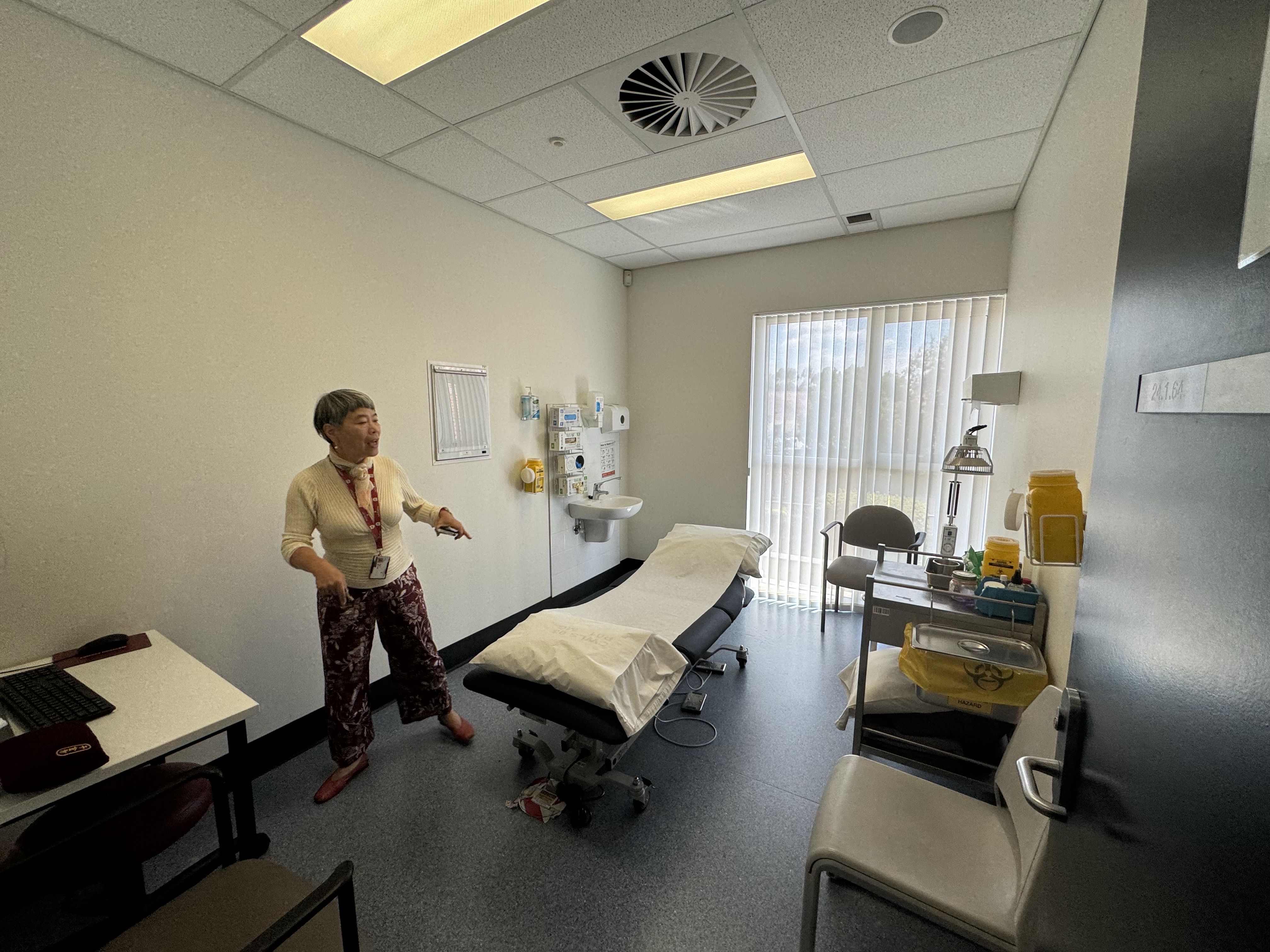
During their clinical rotation at Blacktown Hospital, a teaching hospital in New South Wales, nursing supervisors guided the eight Asia University students in frontline emergency care and maternal-child health care practices, including emergency department workflows, equipment, and staffing arrangements. Students also observed intensive care units, noting differences from Taiwanese hospitals. ICU designs in Australia are more family-friendly, allowing longer visiting times and reducing patients’ feelings of isolation. Students also observed that critically ill patients tend to have shorter ICU stays, leaving a strong impression.
At Nepean Hospital, located in the western suburbs of Sydney, students rotated through multiple specialty units in this key local medical center, which provides emergency care, surgery, obstetrics, intensive care, rehabilitation, cardiology, oncology, and mental health services. Nepean Hospital has long been a teaching hospital affiliated with WSU, offering clinical training for nursing, medical, and health-related students. Students learned through hands-on experience and observation, gaining insights into the differences between Australian and Taiwanese hospital operations.
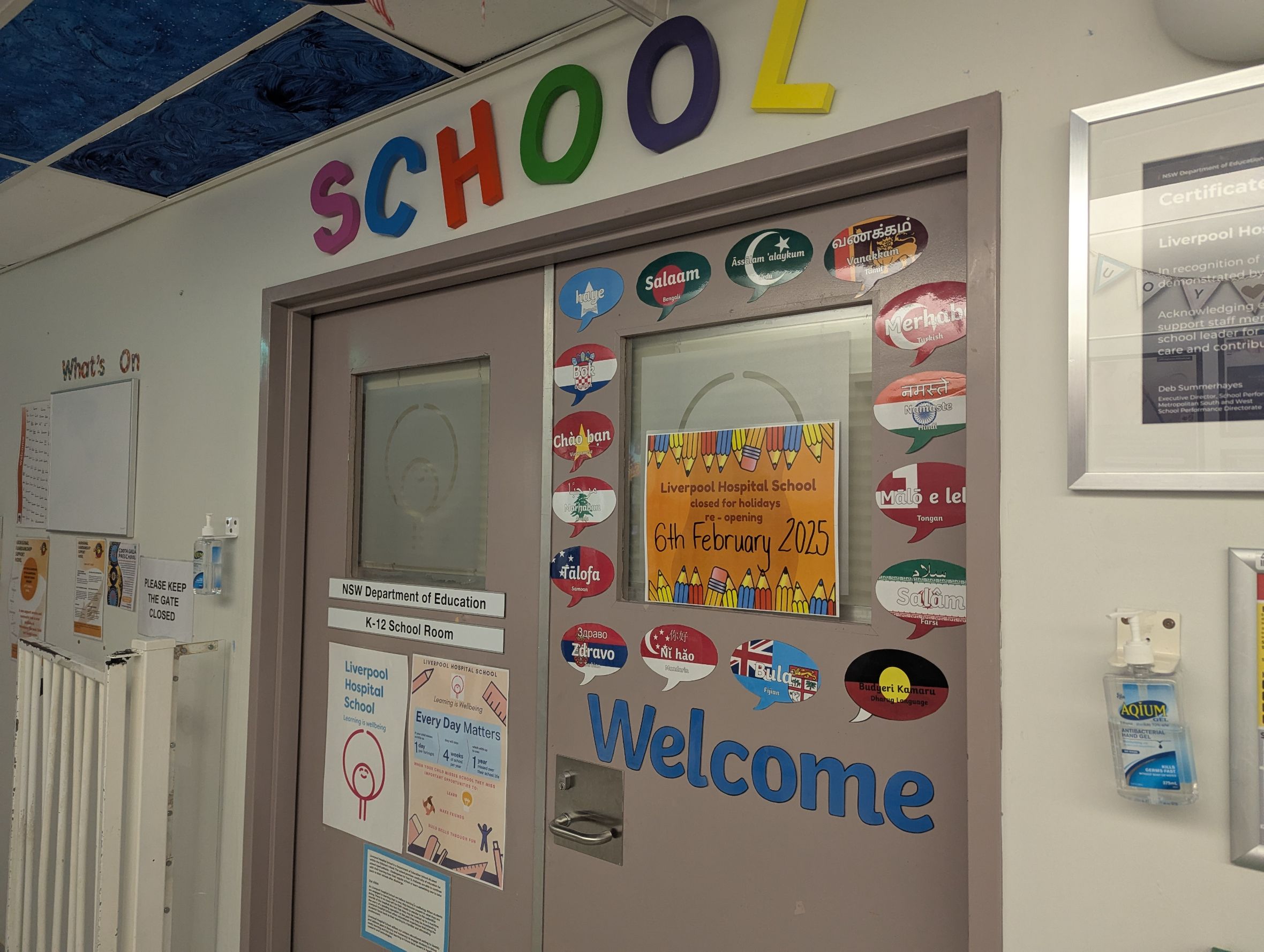
During rotations at Liverpool Hospital, students had the opportunity to enter pediatric wards and neonatal ICUs. They were impressed by features such as an in-hospital kindergarten for pediatric patients, which allows hospitalized children to continue learning without falling behind academically. Another notable feature was the Pediatric Short Stay Unit, a separate area for children from the emergency department, providing a safe and comfortable environment for rest and recovery.
The eight outstanding students selected by Asia University College of Nursing gained rich experiences in both classroom learning and clinical practice. Through an in-depth understanding of Australia’s healthcare system, observing professional nursing standards, and experiencing the operations of various medical units, students not only expanded their professional perspectives but also encountered diverse cross-cultural practices in healthcare.
Students Chen and Cai shared that although the internship appeared similar to Taiwanese teaching methods, local instructors emphasized collaborative participation and discussion. Courses encouraged brainstorming to deepen understanding of nursing knowledge. Technical courses focused on clinical fundamentals and practical skills, with instructors readily answering questions, helping students grasp differences between the Australian and Taiwanese healthcare systems and enhancing engagement in learning. Student Huang highlighted the interactive small-class teaching, which emphasized discussion, critical thinking, and immediate personalized feedback, deepening her understanding of self-directed learning and engagement. Chen noted that Australian nursing places strong emphasis on mother-infant bonding and family-centered care, with rooming-in beginning immediately after birth and postpartum hospital stays lasting only two days, followed by home visits from midwives—highlighting a significant difference from Taiwanese postpartum care models.
Login Department of Nursing & Graduate institute of Nursing, Asia University